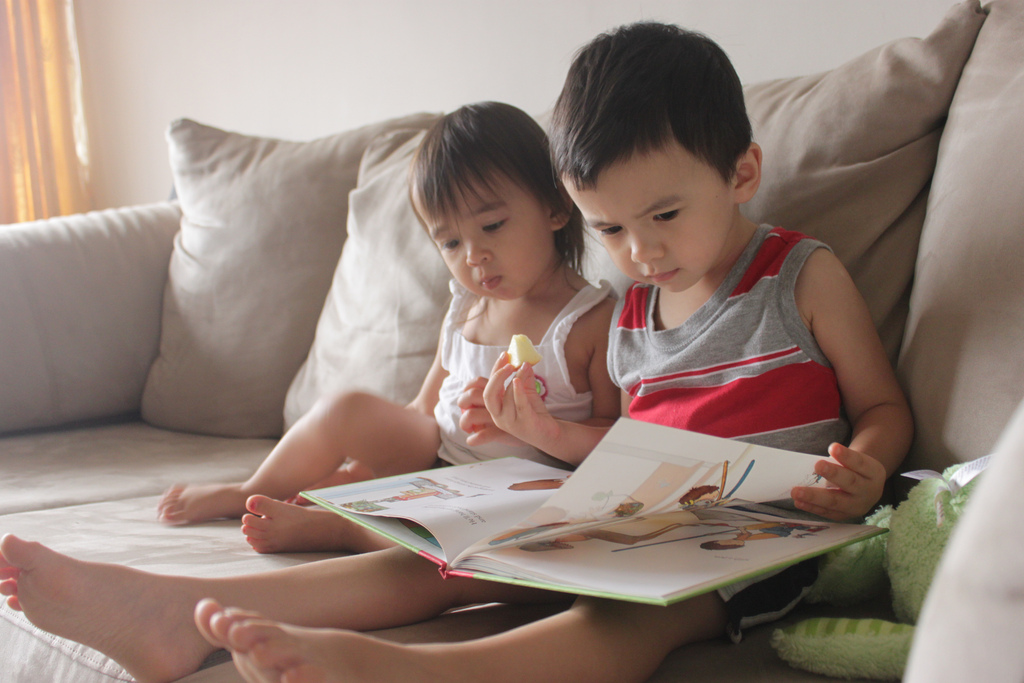
I need – I Want

I need - I want

I need - I Want

I Need-I Want:  The power phrases “I need” and “I want” will help you provide guidance. Tell the kid exactly how you want him to act. You don’t necessarily have to put “I need” or “I want” in front of it, but keep it in your brain because it helps you focus on the action you want to see. Examples:   

  • (I need) bottom on the chair, feet on the floor.
  • (I need) quiet feet, quiet mouth, hands to yourself.
  • (I want) eyes on me.
  • (I want you to) put the game controller down and get your shoes on because it’s time to go.

It’s not time to:  Use this power phrase to redirect an action and help with transitions. I use this frequently with transitions for younger kids.  “It’s not time to play with the snake; it’s time to go back to class”.  

Or if you’re running late and the child is focused on fixing his broken army man, you say, “it’s not time to fix your army guy, it’s time to go to school. We can work on that first thing when we get home”.  

Or if the kid has her nose buried in a handheld game, you say, “it’s not time to play your game. It’s time to eat dinner”. 

This is where I jump up and down about a schedule and chore chart. There needs to be certain times of day set aside for electronics, television, homework, play – all of it.  You and I both know he’ll keep his head buried in video games all freaking day if you don’t limit the use.

Set one hour a day (the same time everyday!!!) for your child to do the electronic stuff. Don’t wimp out about the consistency and discipline.  He WILL stop playing when time is up. Otherwise, I guarantee there will be fights over “You never let me play!” or “I’m just about to finish level ten – don’t mess me up” or “I promise I’ll do my homework later”! 

With a set schedule, the kid knows exactly what to expect.  It puts limits on demands, gives him responsibility, teaches organization and prioritizing skills, and gets him out of that electronic funk! 

There is definite value to the hand-eye coordination and strategy skills honed by games, but there is more to life than that!! If you have a kid that resists transitions and fights you on anything he doesn’t want to do, SET UP A SCHEDULE AND CHORE CHART!!! You probably need it even more than he does! Get with it. 

When you have a schedule, it’s super easy to say, “it’s not time to,” without arguments. The child knows the routine, knows what to expect, and knows you will be consistent.

Don’t worry about it:  Ooooh, mercy. Kids are always getting their undies in a bunch about what other kids are doing. “He’s looking at my cards!”  “She’s not standing in line.”  “He’s supposed to be doing math, not reading a comic.” It gives me a headache just thinking about it.  And my pet answer: “Don’t worry about what he’s doing” or simply, “Don’t worry about it.”  Cut off the concern and don’t engage the comment.

If it’s something that needs to be addressed, pull the other kid aside later, but don’t dive head first into the busybody, I-don’t-like-what-he’s-doing game. Who the heck has time?   

He/She doesn’t have to:  This power phrase is a constant for me.

  • “She’s not playing with me!”  
  • “She won’t share!” Well guess what.  
  • “She doesn’t have to!!”

 Life isn’t all about you and your wants.  Give it a rest.  So I’m constantly explaining, “She doesn’t have to play dolls with you”.  “She’d like some alone time and you need to respect that.” This one is especially important with siblings because they need to learn how to respect each other.  “Yes, you don’t like it when sibs don’t want to do what you want to do, but that’s life! Get used to it!”

Just remember to provide parental guidance and flip it around for the upset kid. Explain, “remember yesterday when Julie was bothering you to play?  You wanted some time to do your puzzles, right? Would you have wanted me to make you stop and go play with her?”

 Get that dialogue going and get them to see another point of view.  Turn it around so they understand how it would affect them if the tables were turned.  They can abstract, but you still have to give constant examples so they can piece it together and learn.

It’s okay if:  This power phrase is similar to “don’t worry about it?” and “he doesn’t have to.”  Use it when you want to provide a better explanation. “It’s okay if she likes pineapple on her pizza. We don’t need to make fun of it.”  Or, “It’s okay if he needs scrap paper to work out his math problem.” Or, for younger kids, “It’s okay if he pours sand on the grass. He’s a guest, and it won’t hurt anything.”

Power Action Examples

Power Action

Power Action Examples

Example #1: 

Kid: “But she’s annoying me!”

Caregiver:  “Well, what are your choices? You can say to her, please stop kicking my chair; it’s annoying.?  Or you can walk away. Which do you think is better?”

Power Action Examples

Example #2:

A child is eating lunch, and you tell him it’s time to clean up. He forcefully yells, “But I can’t carry this all by myself!!”

You guide him:  “Then you say – I need some help, please.”

The kid repeats:  “I need help, please.”

Praise the child by saying:  “That’s great asking. Of course I’ll help.”

Blocking:  Blocking is a very powerful tool for your toolbox. Sometimes kids get fixated on what they want to do and, for the life of them, can’t get their brains headed in a different direction. So you put your body in front of them and block the action. You don’t grab, you don’t talk, and you don’t get ticked off.  You simply use your body as a deterrent.

Example #1:

An obsessive compulsive child fixates on turning off the lights when he leaves the classroom. You turn the lights back on. He rushes back to turn them off again. Use your body to block the light switch.

Example #2:

Your kid is dead set on a snack cake for an afternoon nibble. You say no. She doesn’t like your answer and goes to the cabinet to get a snack cake. Step in front of the cabinet and block her.  Put your arms out to the side if necessary. Don’t let her reach around you.  This is not a game, this is not a lecture, and you need to keep your emotions in a bottle .

Stay silent and block. (And by the way, if your kid is this obstinate about something as benign as a snack cake, we need to have a serious talk! Get some control and respect back in that house, my friend.  Now.) 

Example #3:

After speech therapy, my kids are allowed a single stamp on their hands. One child insists on three and rushes in to get them. So I quickly take the ink and stamps, put them behind me, and block. In this case, it‘s usually as simple as that, and the kid straightens up quick.  

Kids only do this because they’ve gotten away with the behavior before. A teacher or parent says one thing, the kid wants to do another, so they do it quick as lightening before the adult has time to stop them.

For this example, you might think, it’s a stamp. . . so what? But it is a big deal. The child is running you over to do what they want. To heck with your rules!  I’m gonna do it anyway!

We cannot let kids call the shots like that.  It leads to other, more aggressive behavior.  First they want the stamp. Then they want potato chips for dinner. Then they walk off and ignore you when you try to discipline.  Then they throw a fit because you won’t buy them something.  

It wears you down and one day you wake up in tears with a hateful, defiant child living with you and think, “What on earth happened?”  So stop it at the stamp!


Intense Personalities and Severe Behaviors

Intense Personalities and Severe Behaviors

Once you have a handle on the techniques of ABC Parenting, behavior should turn around. However, sometimes you’ve got a kid with ingrained habits or irritating defiance and they need an extra push.  Much of this nonsense can stem from assertive personalities gone haywire.  Self-assured personalities are a good thing.  I love them in kids because they have some built-in drive to get things done.  So we don’t want to squash it.  We just want to guide them on appropriate outlets and negotiation.

Intense Personalities and Severe Behaviors

Bossy

Bossy kids are our future leaders!  But they can’t lead by being bossy.  They can only tick people off and lose friends. Yikes!  Bossy kids need to get the dialogue thing going.  They need direction on how to get what they want in a more constructive manner.  So show them.

As a speech therapist, my most enjoyed specialty is social therapy with kids who have high level autism and Asperger’s.  They are super smart, so they can function in a regular classroom setting (although this can be a huge struggle until they mature to high school age).  They are socially very inappropriate and don’t understand what they do wrong and why they can’t make friends.  They have weird quirks, don’t read the social cues others give and take things very literally.  So I have to take each situation, break it down and delicately (yet literally) tell them exactly what it is they did that threw the other person off or made them think “Okay, that’s a weird person!”

Obviously, dealing with bossy personalities isn’t exactly the same, as you don’t have to be so specialized and break things down to the nth degree, but that’s actually the beauty of it.  You just have to pay attention to the situation and teach the bossy kid the following:

  • Exactly what he said that was bossy.
  • Why others think it’s bossy.
  • How it affects him when others think he’s bossy.
  • What he needs to say instead to get what he wants.

Kids are very egocentric. They want to understand how the bottom line affects them and only them. Turn things around so they understand. 

  • John makes a comment.
  • Others take it a certain way (think it’s rude).
  • Then others act a certain way (argue, walk away, or call John names).
  • That action ticks John off or makes him feel bad.

Now let’s make this more concrete.  Suppose John is building a rocket.  Addy is making the launch pad.  John says, “Not like that! Use the red paper!”  Addy snaps, “Whatever!” and stomps off.  Here’s what you say to John:

  • John, you told Addy, “Not like that!”  Then you told her what color to use.
  • Addy thought that was rude because she was doing it how she wanted.  That was her part of the project.
  • Addy snapped at you and walked off because she felt like you were ordering her around.  She doesn’t want to be with people who order her around during a fun project.
  • If you think the red would look better, you need to say, “Wow.  That blue looks great.  I think it might be even better with some red added in.  What do you think?”  And if she disagrees, respect it and move on.  People don’t have to agree or think the same way you do.

John needs to understand that his actions do come back around to him.  Sometimes kids don’t want to be nice for the sake of being nice.  Bah humbug to that!  But if you explain that his actions come back around to him and that he can approach things a different way to get positive results, it might make more of an impact.